LINKS
YouTube Playlist
Instagram @toppowass
Headphones recommended
HOW IT WORKS
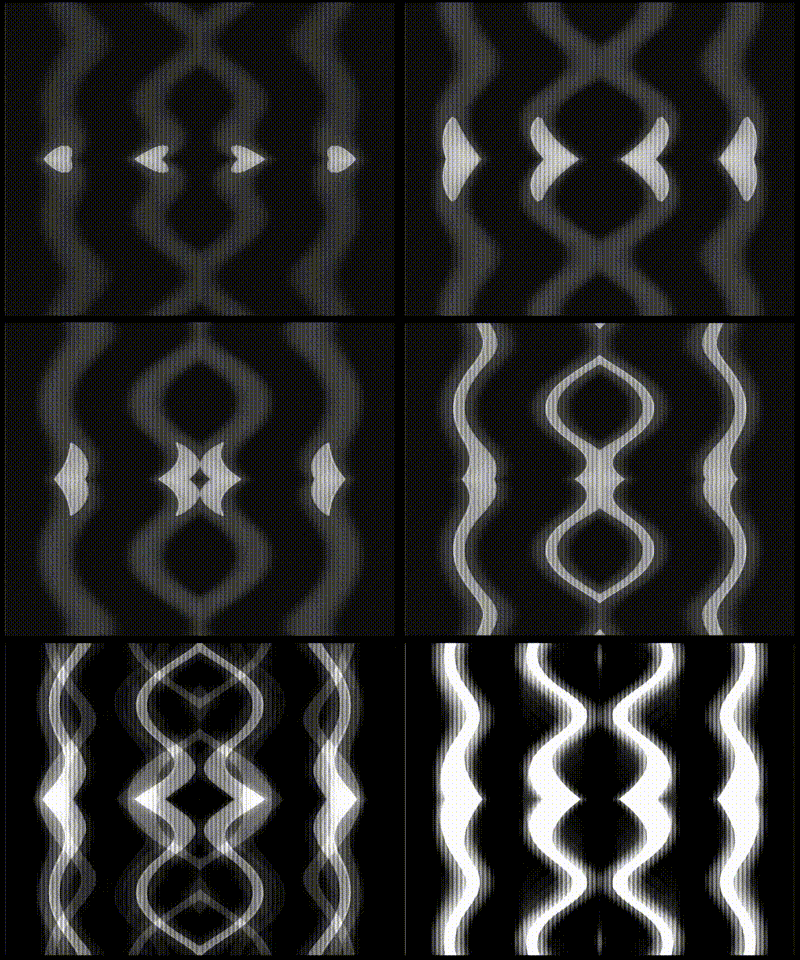
The video content—whether generated and manipulated through an analog video synthesiser, captured by a camera, or sourced from any video feed—is composed of three RGB color channels: red, green and blue.
These RGB channels are converted into audio signals using a custom-soldered cable that transforms the VGA video output into three separate audio streams, one for each color channel.
Through modular synthesis, I can create or alter the video content while simultaneously listening to the sounds generated by the displayed images. Each color channel can then be further processed through audio synthesizer modules, producing unique loops and creating a continuous feedback between image and sound.
VIDEO SIGNALS AS SOUND
An analog video synthesizer generates shapes and colors on a cathode-ray tube (CRT) display by producing electrical signals that control the electron beam inside the tube.
These signals operate across different frequency ranges. Some of them fall within the range of human hearing, making it possible to approach the video signal not only as an image, but also as a potential source of sound.
In general, the system operates across three main frequency ranges:
ANIMATION — below approximately 25 Hz
Y AXIS — approximately 50 Hz to 15 kHz
X AXIS — approximately 15 kHz to several MHz
LIGHT / SOUND
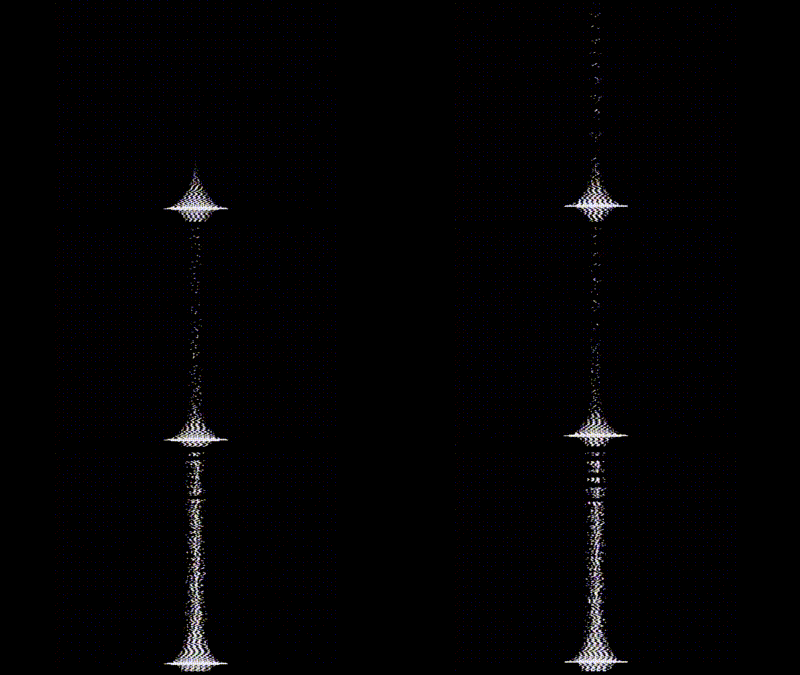
The colors we perceive result from the interaction between light and matter: objects absorb, reflect or transmit different wavelengths of visible electromagnetic radiation. The human visible spectrum extends approximately from 380 to 750 nanometers.
Sound is also described through waves, but unlike light it is a mechanical phenomenon and requires a medium through which to propagate. Human hearing typically extends from approximately 20 Hz to 20 kHz.
Light and sound therefore belong to radically different frequency ranges and physical phenomena, but waveforms can be described through shared properties such as frequency, wavelength and amplitude.
I like to think of colors as inaudible frequencies. The possibility of creating relationships between color and sound has always fascinated me.
SELECTED VIDEOS
– more on my YOUTUBE CHANNEL –